
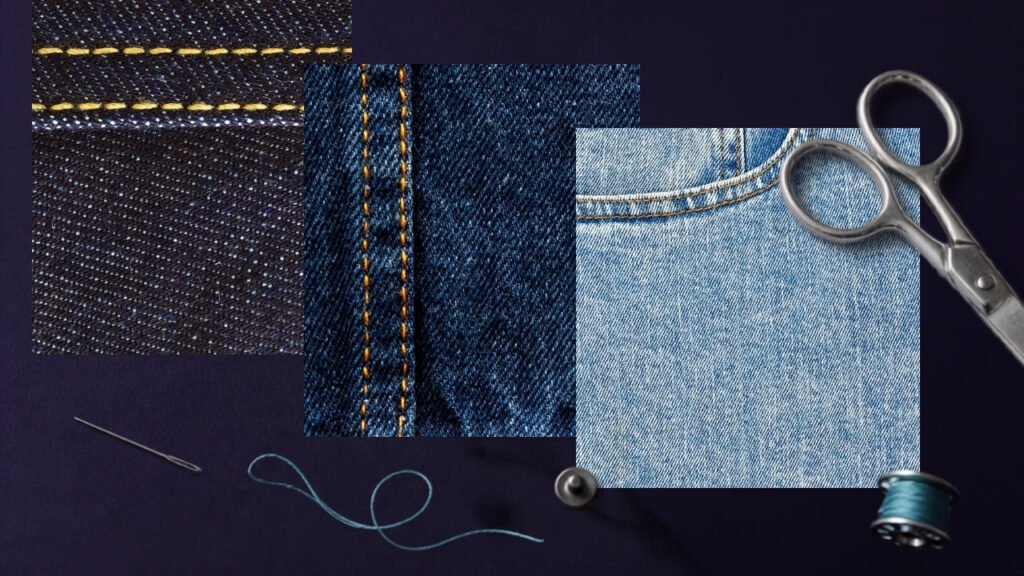
What exactly is denim?
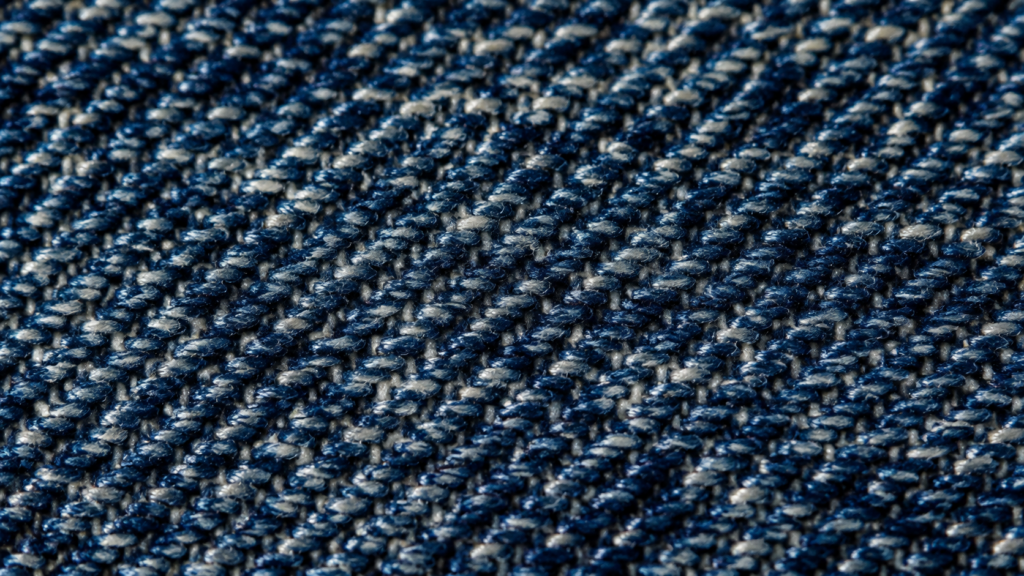
Denim is a twill fabric traditionally made from cotton. In its classic form, the lengthwise, or warp, threads are dyed indigo blue, while the crosswise, or weft, threads remain light in colour. The diagonal weave creates the characteristic lines that can be seen when looking at the fabric closely.
Today, denim is also available in blends with elastane, polyester or recycled fibres. These blends alter its stretch, strength, feel and potential for reuse.
A brief history of denim
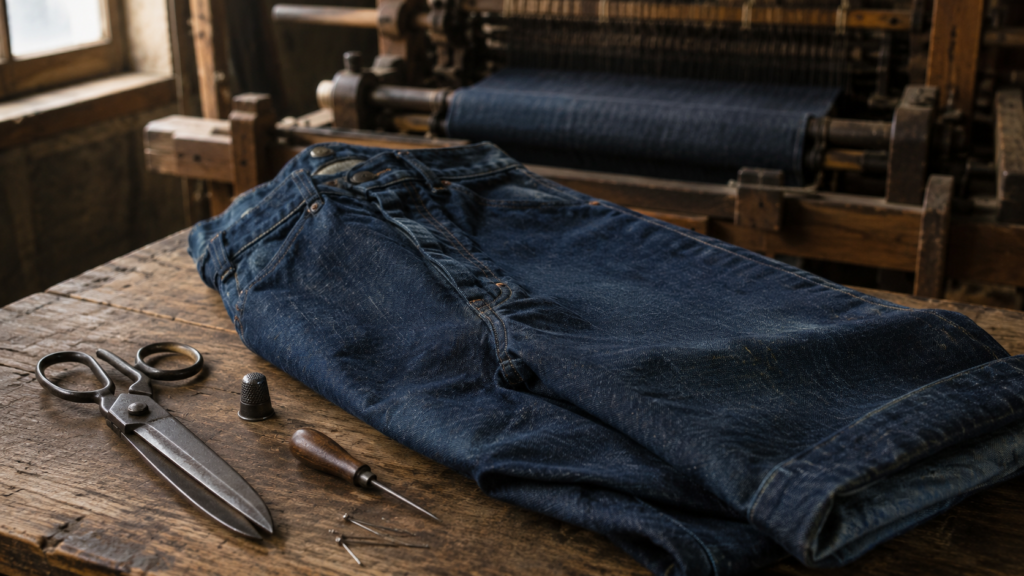
The name denim is often linked to the French expression “serge de Nîmes”, used to refer to fabrics associated with the city of Nîmes. The word jeans, meanwhile, is commonly linked to Genoa and the hard-wearing garments worn by workers and sailors.
In 1873, Levi Strauss and Jacob Davis patented a system of metal rivets in the United States to reinforce the points of greatest stress in work trousers. Over time, denim went from being primarily a workwear fabric to becoming an everyday garment and a cultural symbol found around the world.
Main types of denim
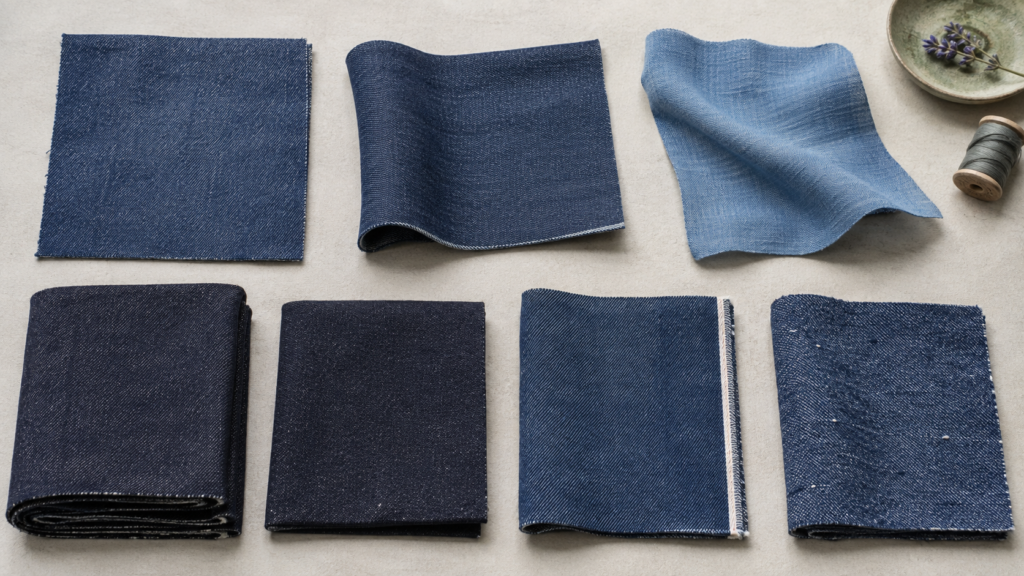
Rigid denim: contains no elastane, or only a minimal amount. It is generally hard-wearing, holds its shape well and moulds to the body with wear.
Stretch denim: usually combines cotton with elastane. It is more flexible and comfortable, although its performance and durability depend on its composition.
Lightweight denim: is thinner and easier to handle. It can be used for shirts, dresses, linings and projects that require less structure.
Heavyweight denim: is thick and hard-wearing. It is used for trousers, jackets, bags and items subject to heavy use, but may require specific needles and sewing-machine adjustments.
Raw denim: has not undergone the usual industrial washing processes after dyeing. It retains a deep colour and develops distinctive marks with wear.
Selvedge denim: is made on looms that produce a compact, finished edge. This edge prevents the fabric from fraying, but its presence alone does not guarantee that a garment is of better quality.
Recycled denim: contains reclaimed fibres from textile waste or other production processes. Its composition and strength can vary, so it is always advisable to check the label.
Why does denim change with wear?
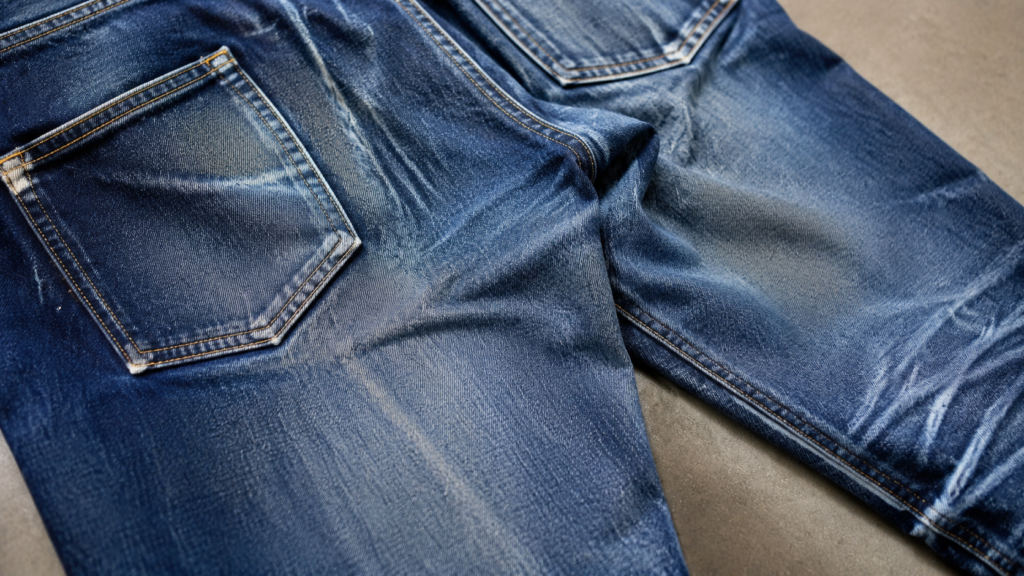
Indigo mainly bonds to the surface of the threads and does not always penetrate fully into their core. Friction, washing and everyday movement cause some of the surface colour to wear away, revealing lighter areas.
This is why each garment develops different marks at the knees, pockets, seams and creases. This ageing is part of denim’s character and also provides many opportunities to repair, embroider or transform the garment.
What does denim weight mean?
Denim weight is usually expressed in ounces per square yard. The higher the number, the thicker and more structured the fabric will generally be.
Lightweight denim is easier to handle and is suitable for flowing garments or small projects. Midweight denim is commonly used for trousers and jackets. Heavyweight fabrics provide structure and durability, but they require suitable tools and particular care when sewing through several layers.
Weight alone does not determine quality. Other factors include the composition, type of thread, fabric density, finishes and the way the garment has been made.
Why reuse denim?
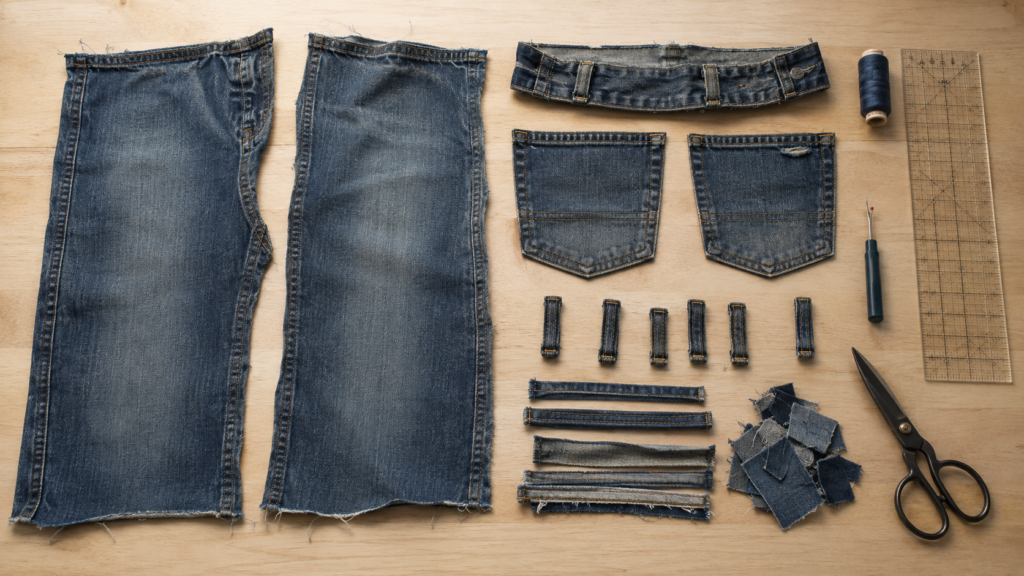
A worn denim garment does not have to become waste straight away. If parts of the fabric remain strong, it can be repaired, transformed or taken apart so that its different components can be reused.
Pockets, waistbands, belt loops, seams and scraps can be incorporated into bags, accessories, garments and decorative projects. Before cutting, it is advisable to inspect the entire piece and decide which features are worth preserving.
Reusing denim extends the life of a material that has already been manufactured. However, every project should take the actual condition of the fabric into account: weakened areas need reinforcement, and some stretch blends may lose their stability with wear.
Denim and chambray: they are not the same fabric
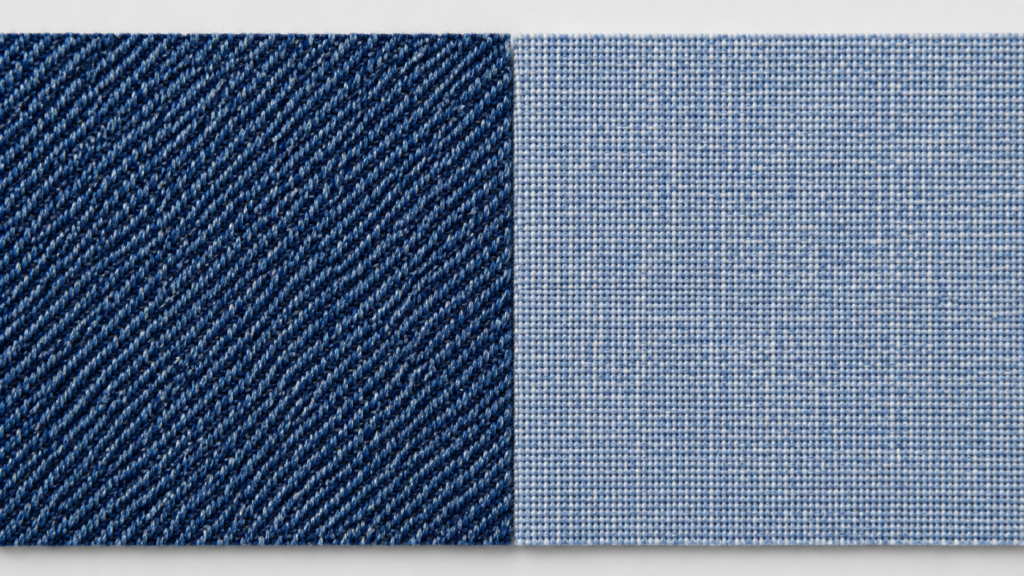
Although they may look similar, their construction is different. Denim uses a twill weave that creates visible diagonal lines. Chambray normally uses a simpler weave without this characteristic diagonal.
Chambray is usually thinner, lighter and more flexible, which is why it is often used for shirts and soft garments. Denim generally offers more structure and durability, although there are many variations of both fabrics.
How to choose denim for a project
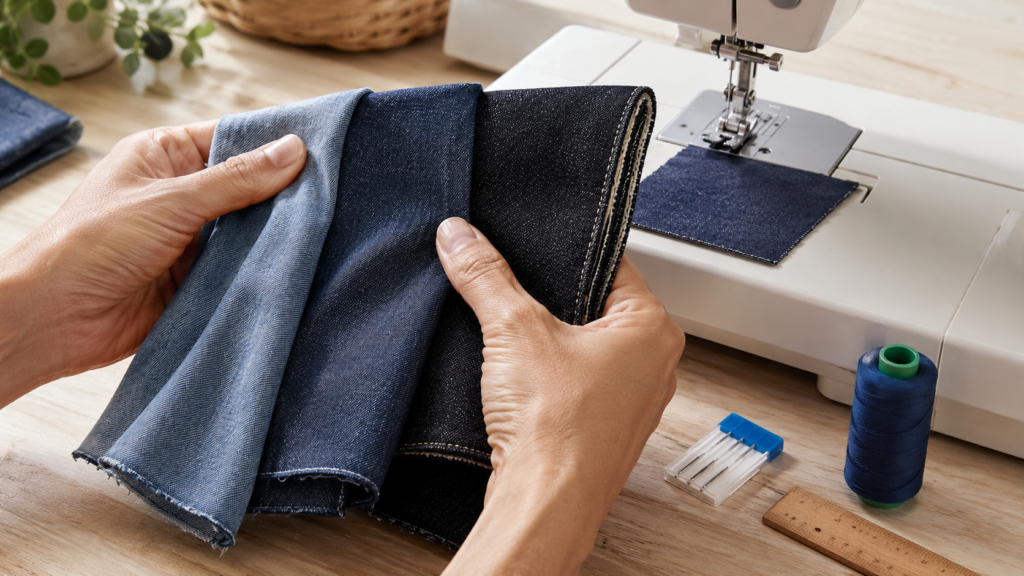
Before you start, look at the fabric’s thickness, composition, stretch and condition. A denim with some flexibility may be a good choice for a comfortable garment. For a bag or structured piece, a firm, hard-wearing fabric generally works better.
If you are going to reuse a pair of jeans, hold the worn areas up to the light to inspect them. Decide which seams, pockets and finishes you want to preserve, and test your stitching on a scrap before working on the final piece.
You should also adapt the needle, thread and machine settings to the number of layers. The right tool helps, but it should never replace testing on the actual fabric.
Frequently asked questions about denim
Is all denim blue?
No. Indigo blue is the most traditional colour, but denim can be dyed and produced in many colours and finishes.
Do denim and jeans mean the same thing?
Denim usually refers to the fabric. Jeans can refer to both this material and a garment made from it, especially denim trousers.
Can denim be sewn with a domestic sewing machine?
It depends on the thickness, the number of layers and the machine’s capabilities. It is important to use a suitable needle, sew slowly and test on a scrap first. Do not force the machine when it encounters an area that is too thick.
Denim as a starting point
Understanding denim’s structure, weight and composition helps you choose, sew and repair it more effectively. It also reveals the potential in garments that appear to have reached the end of their useful life.
At Yousyslow Denim, we will continue to explore its history, sewing techniques and different ways to transform it. In future articles, we will look at how to choose needles and threads, repair worn areas and make use of every part of a pair of jeans.
Sources consulted
Levi Strauss & Co. — The History of Denim The History of Denim – Levi Strauss & Co: Levi Strauss & Co
Google Patents — US Patent 139121A by Jacob Davis and Levi Strauss, registered in 1873 US139121A – Improvement in fastening pocket-openings – Google Patents