
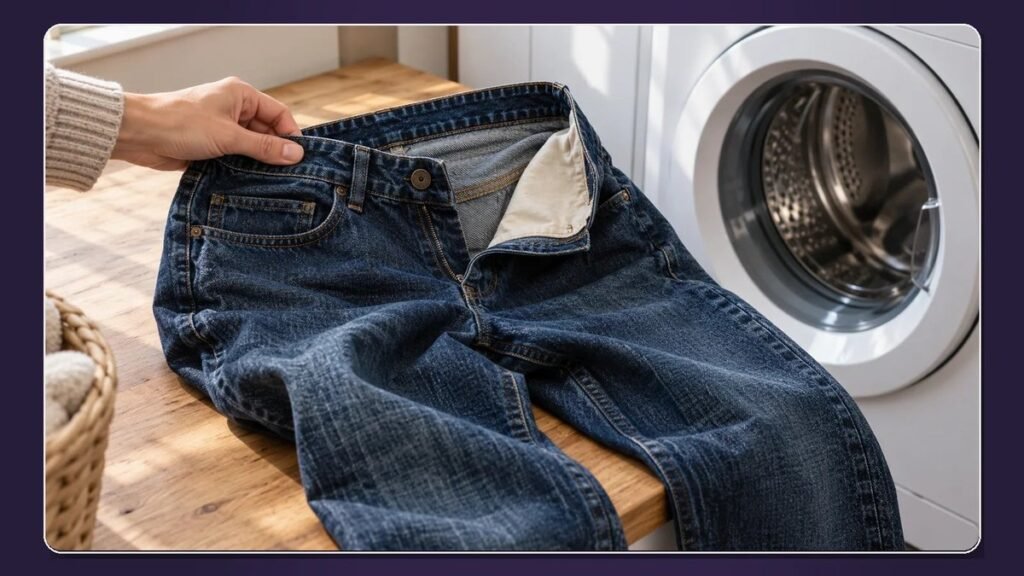
Washing jeans seems simple until one of these surprises appears: pale streaks after the spin cycle, color that loses intensity, a waistband that no longer fits the same way, or a small tear that comes out of the washing machine as a much bigger problem.
There is no single washing frequency or cycle that works for every pair of jeans. Rigid denim, black denim, jeans with elastane, and heavily worn jeans respond differently to water, agitation, and heat. The garment’s care label should always be your starting point.
In this guide, we will look at when to wash jeans, how to prepare them, which temperature to choose, and which mistakes can speed up wear. This is not about never washing them. It is about washing them when they need it and doing so with a little care.
How often should you wash jeans?
There is no number of wears that works for everyone. Washing frequency depends on how long you have worn the garment, the heat, your activity, stains, odors, contact with dirt, and the type of denim.
Jeans worn for a few hours in a clean environment do not necessarily need to go straight into the washing machine. You can empty the pockets, check for stains, and let them air out before putting them away. However, if they are stained, damp, smell unpleasant, or have been worn in a dirty environment, delaying the wash offers no benefit.
It is also worth checking the areas that experience the most friction:
- waistband and belt loops;
- pockets;
- hems;
- knees;
- crotch;
- seat.
Sometimes the garment does not need a full wash, but a fresh stain still needs to be treated. At other times, the opposite is true: the outside may look clean, but the way it has been worn indicates that it is time for a wash.
Before washing: the check that could save your jeans
Taking two minutes to inspect the garment can prevent plenty of unpleasant surprises.
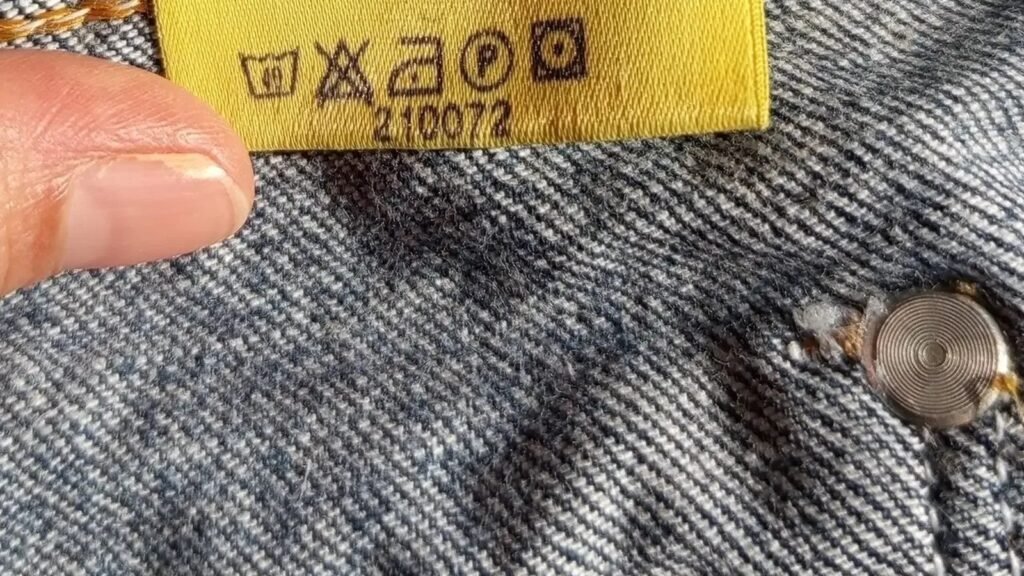
Read the care label
The symbols tell you whether the garment can be washed at home, the maximum temperature, and any precautions for drying or ironing. According to GINETEX, the number inside the wash tub symbol indicates the maximum temperature that must not be exceeded. Lines underneath the symbol mean that the garment needs a gentler process.
Fiber content matters too. Rigid cotton reacts to wear and washing differently from a blend containing elastane, polyester, or other fibers. If you want to understand these differences, read our guide to what denim is, its characteristics, and its different types. .
Empty the pockets
A coin, a piece of paper, or an object with sharp edges can mark the fabric, clog the machine, or leave residue that is difficult to remove. Remember to check the small front pocket that is so easily overlooked.
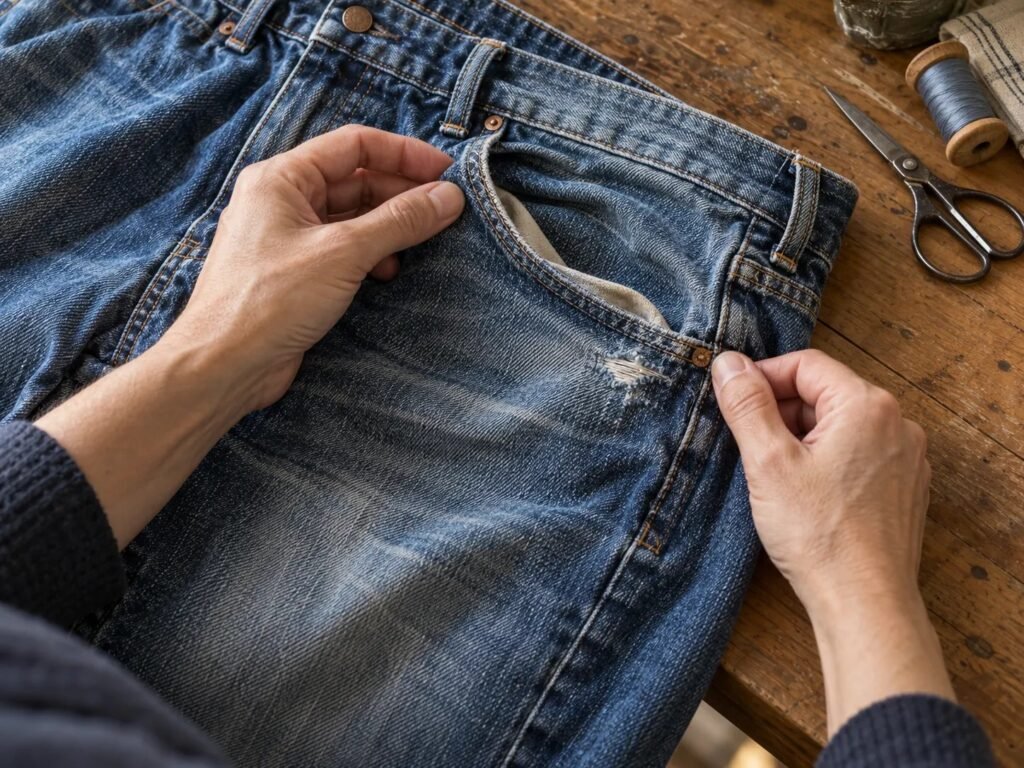
Look for open seams and weakened areas
Check the crotch, pocket edges, knees, and hems. If you see an open seam, broken threads, or a hole beginning to form, repair it before washing whenever possible. The movement of the washing machine can enlarge an already weakened area.
If the repair involves sewing through several layers, our guide on how to sew denim without breaking needles will help you prepare your machine and test it safely.
Close zippers and secure loose components
Close the zipper to reduce snagging, and check buttons, rivets, and embellishments. Do not force a fastening that is already damaged: repair it or protect the area before putting the garment in the machine.
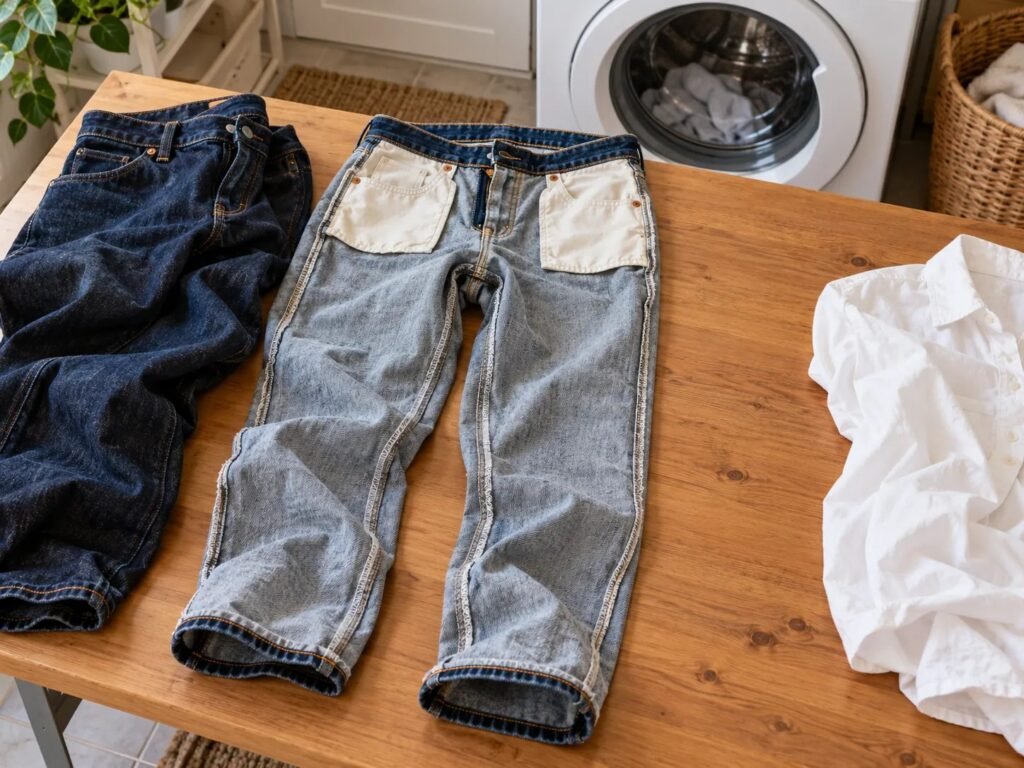
Turn the jeans inside out
Washing jeans inside out reduces direct friction on the outer surface and helps prevent certain pale marks. Clevercare, the textile-care initiative associated with GINETEX, recommends turning jeans inside out before putting them in the washing machine.
How to wash jeans in a washing machine
A cautious routine is a useful starting point, but the garment’s care label always takes priority.
- Separate colors. Do not mix dark or new jeans with light-colored garments if there is a risk of color transfer.
- Wash them inside out. This reduces friction on the outer surface.
- Do not pack the drum tightly. Clothes need room to move and rinse properly.
- Choose a cycle compatible with the care label. If there is a line beneath the wash symbol, use a gentler cycle.
- Use the recommended amount of detergent. More detergent does not mean a better wash and may leave residue.
- Avoid bleaching products unless the label expressly permits them. A crossed-out triangle means bleach must not be used.
- Remove the garment when the cycle ends. Leaving it damp and crumpled inside the drum encourages creases and odors.
If you wash several pairs of jeans together, try to group garments with similar colors and similar levels of dirt. A new or very dark garment deserves particular attention during its first washes because it may release dye.
What temperature should you use to wash jeans?
The short answer is: use a temperature permitted by the care label that is sufficient for the garment’s actual condition.
For a routine wash, cold water or a low-temperature cycle compatible with the label is usually a sensible starting point for protecting color and limiting exposure to heat. Clevercare recommends using very cold water for jeans. That does not make any specific temperature a universal rule: a stain, a particular hygiene requirement, or the manufacturer’s instructions may call for a different treatment.
Keep these differences in mind:
- Dark or black jeans: friction, washing, and heat can accelerate visible color loss.
- Denim with elastane: excessive heat may affect the elastic fibers and the garment’s ability to recover its shape.
- Rigid denim: it may shrink or change in feel depending on its finish and previous treatment.
- Raw denim: follow the brand’s specific instructions, especially during the first few washes.
- Repaired or transformed garments: patches, thread, adhesive, embroidery, or lining may require different care from the original fabric.
Do not choose a temperature simply because the fabric feels heavy. Denim weight alone does not reveal the fiber content, colorfastness, or finish of the garment.
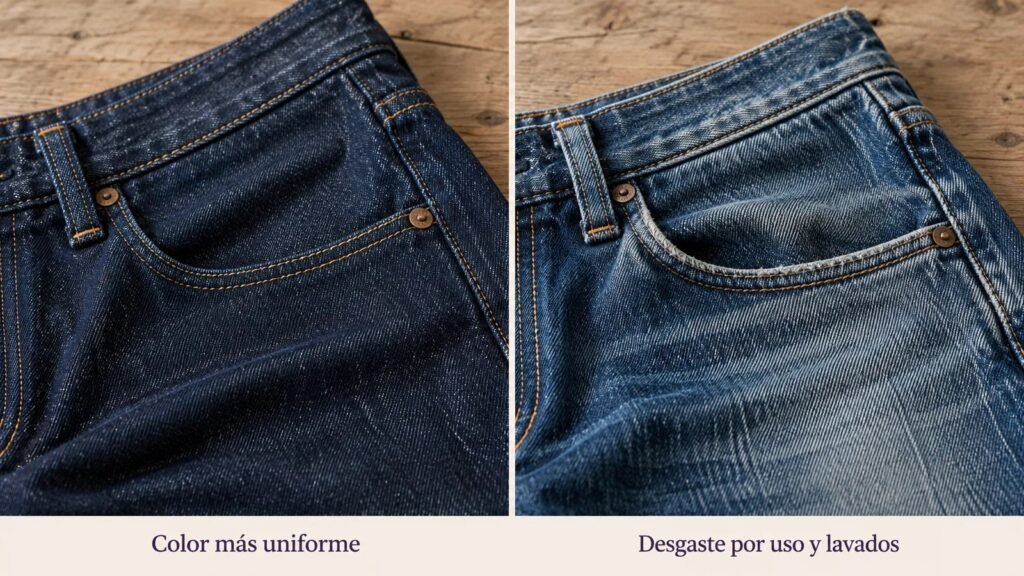
How to keep jeans from fading more than necessary
Denim changes with wear. In many indigo-dyed fabrics, friction and washing gradually lighten the surface and create distinctive wear patterns. This evolution cannot be stopped completely, but we can avoid subjecting the garment to unnecessarily harsh treatment.
- Wash the garment inside out.
- Separate dark and light colors.
- Use an appropriate cycle without excessive movement.
- Do not exceed the temperature stated on the label.
- Use the correct amount of detergent.
- Avoid leaving the garment damp and crumpled for hours.
- When air-drying, avoid prolonged exposure to intense sunlight if you want to preserve a dark color.
For the first wash, treat new or dark jeans as a garment that may transfer dye. Washing them separately or with similar colors reduces the risk of dyeing other clothes.
What about vinegar?
Vinegar appears in many household recommendations. Clevercare suggests a diluted soak before the first wash to help preserve the color of blue jeans. Even so, we would not present it as a must for every garment.
Finishes, dyes, embellishments, and fiber blends vary. If you decide to use it, first check the garment and washing-machine instructions, use an appropriate dilution, and test cautiously. Never mix vinegar with bleach or products containing chlorine.
How to wash black jeans
A small amount of color loss is more noticeable on black jeans than on mid-blue denim. To slow it down:
- wash them inside out;
- group them with black or dark garments;
- use a low temperature if the label permits it;
- avoid unnecessarily long cycles;
- do not scrub one area forcefully;
- dry the garment without exposing it to excessive heat.
Before using a stain remover, test it on an inconspicuous area inside the garment. An overly aggressive product may leave a pale patch that is more noticeable than the original stain.
How to wash jeans by hand
Hand-washing can be useful for a delicate garment, a recent repair, or denim that needs very little movement. It does not mean that you can ignore the care label.
- Fill a container with water at a temperature permitted by the label.
- Dissolve a small amount of suitable detergent.
- Place the garment in the water without twisting it.
- Move it gently and pay attention to dirty areas.
- Rinse until all detergent residue has been removed.
- Press gently to remove water without wringing forcefully.
- Reshape the garment before hanging it to dry.
GINETEX states that when a label requires hand-washing, the garment should be handled gently, without rubbing, pulling, or wringing.
How to dry jeans without losing their shape
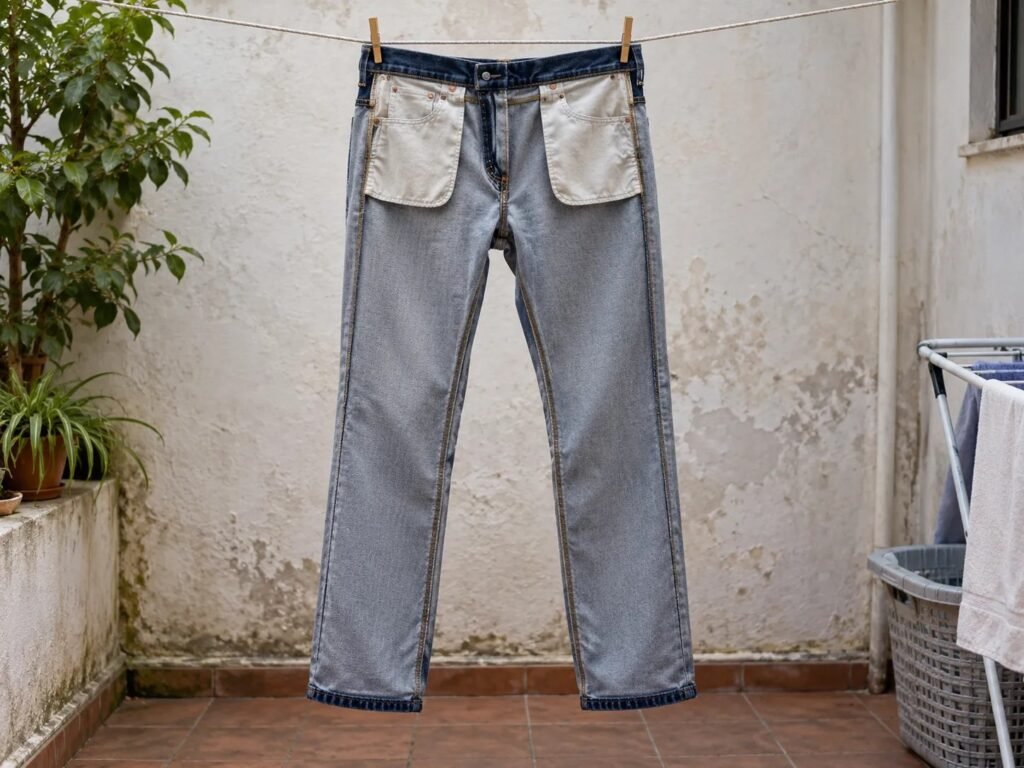
Check the care label again before deciding. If air-drying is permitted, hang the jeans fully unfolded, with the seams properly aligned. Smoothing the waistband, legs, and pockets by hand helps reduce wrinkles and distortion.
Clevercare recommends air-drying whenever possible. If the label permits tumble-drying and you need to use it, choose the drying setting permitted by the label and do not run the cycle longer than necessary. Intense heat can encourage shrinkage, color loss, and deterioration of elastic fibers.
Do not put jeans away until they are completely dry, especially around waistbands, pockets, and thick seams, which take longer to dry.
How to treat a small stain
Act as soon as possible, but do not improvise with aggressive mixtures.
- Remove any excess without spreading the stain.
- Check the care label.
- Use a product compatible with the color and fiber content.
- Test it first on an inside area.
- Work from the edge of the stain toward the center.
- Do not rub so hard that you lighten or damage the denim.
- Rinse or wash according to the product instructions.
A stain may require a specific treatment. Grease, ink, mud, and food do not come out in the same way. If the garment has special value or a delicate finish, consult a garment-care professional.
Common mistakes when washing jeans
Automatically washing them after every wear
This may be unnecessary when the garment is still clean and has only been worn for a short time. Inspect it and make a decision based on its actual condition.
Waiting too long when there is dirt, moisture, or odor
Spacing out washes does not mean keeping a dirty garment. Airing is useful between light wears, but it does not replace a necessary wash.
Ignoring a small tear
A weakened area may open further during the cycle. Inspect and reinforce it before washing.
Using too much detergent
Excess detergent may not rinse out properly and can leave residue. Follow the recommended dose for the load, water hardness, and level of dirt.
Washing everything at a high temperature
Heat does not guarantee better care. It can affect color, fit, and elastic fibers. Use an appropriate temperature without exceeding the maximum shown on the care label.
Always putting jeans in the dryer
Even when a garment can be tumble-dried, it does not always need an intense or prolonged cycle. Air-drying is usually gentler.
Trusting a viral hack without checking the fiber content
Freezing, soaking, or adding household products does not replace the care instructions. Advice that works for rigid denim may not be appropriate for a stretch blend, a black garment, or a repaired piece.
Frequently Asked Questions
Should you wash jeans before wearing them for the first time?
It depends on the garment and your preferences. A first wash can remove surface residue and reveal how much dye the fabric releases, but it also begins the change in color and fit. Check the label; if the jeans are very dark, wash them separately or with similar colors.
Can you wash jeans at 40°C?
Only if the care label permits it. The number inside the wash symbol indicates the maximum temperature, not a temperature that you must always use. For a routine wash, a cooler cycle compatible with the garment may be enough.
Should you turn jeans inside out?
It is advisable, especially for dark jeans or garments with surface finishes. It reduces direct friction on the outer surface during the cycle.
Can you wash blue and black jeans together?
It is safer to separate colors when garments are new, very dark, or likely to transfer dye. If they have already been washed several times, consider how they behave and group them with similar shades.
Does tumble-drying shrink jeans?
Heat and movement can cause shrinkage or changes in fit, depending on the fabric and finish. Use a dryer only when the label permits it and select the indicated treatment.
How should you wash jeans with elastane?
Follow the care label and avoid unnecessary heat. Elastic fibers may lose their ability to return to their original shape when exposed to more intensive treatment than recommended.
Can you wash repaired jeans?
Yes, provided that the repair and all its materials are washable. Check threads, patches, embroidery, adhesives, and linings. If the area has just been repaired or is delicate, a gentle cycle or hand-washing may be more appropriate.
Good care starts before the washing machine
Looking after jeans is not about accumulating rigid rules. It is about observing the garment: its fiber content, how it is dyed, where it is beginning to wear, and which treatments it can withstand.
At Yousyslow, we prefer to inspect before washing, repair before a tear grows, and choose the least aggressive process that leaves the garment genuinely clean. This allows denim to continue changing with wear without deteriorating before its time.
Do you have jeans that bleed dye, shrink, or have changed shape after washing? Tell us about it in the comments. Your experience could help inspire a future guide.